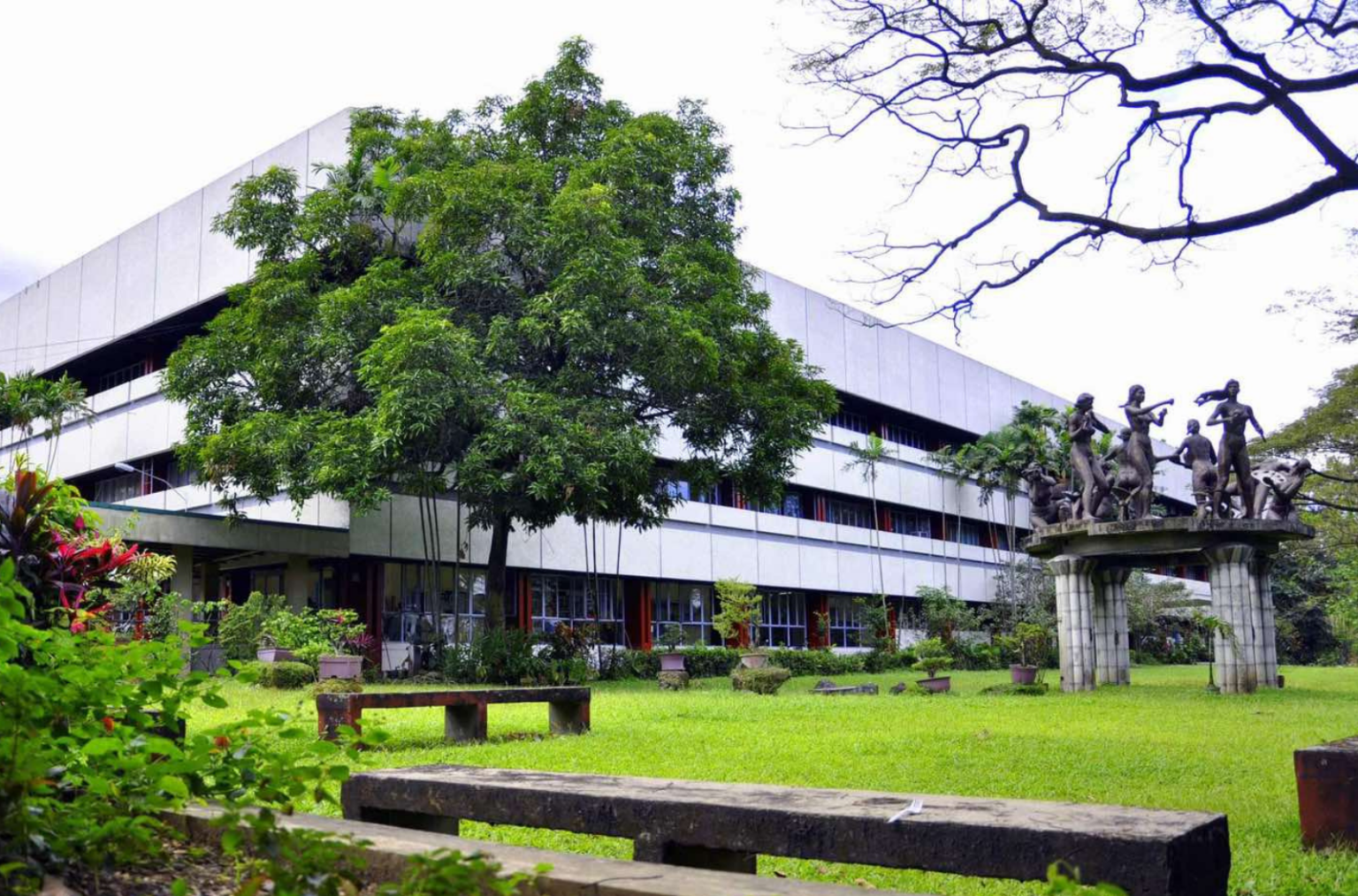
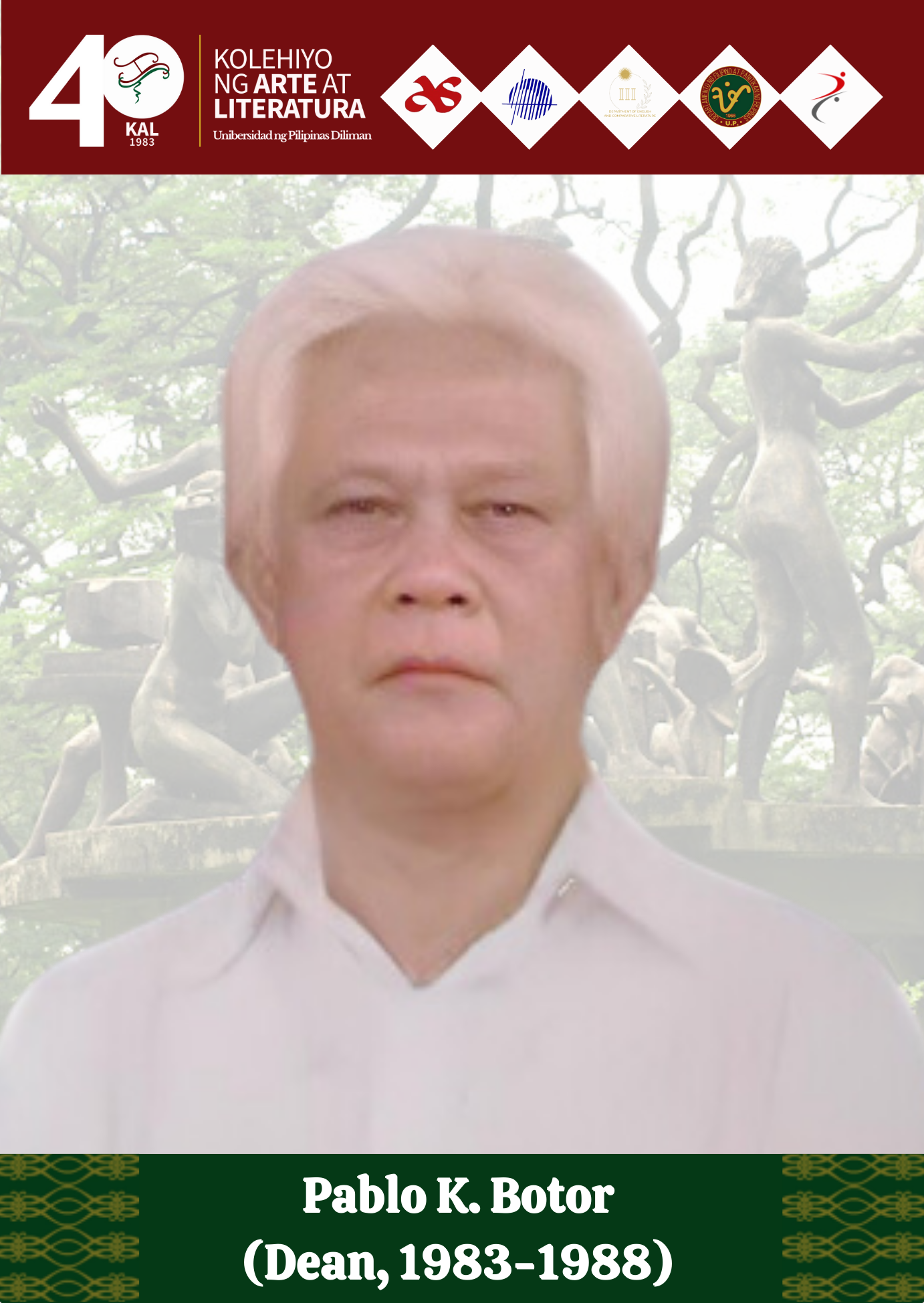
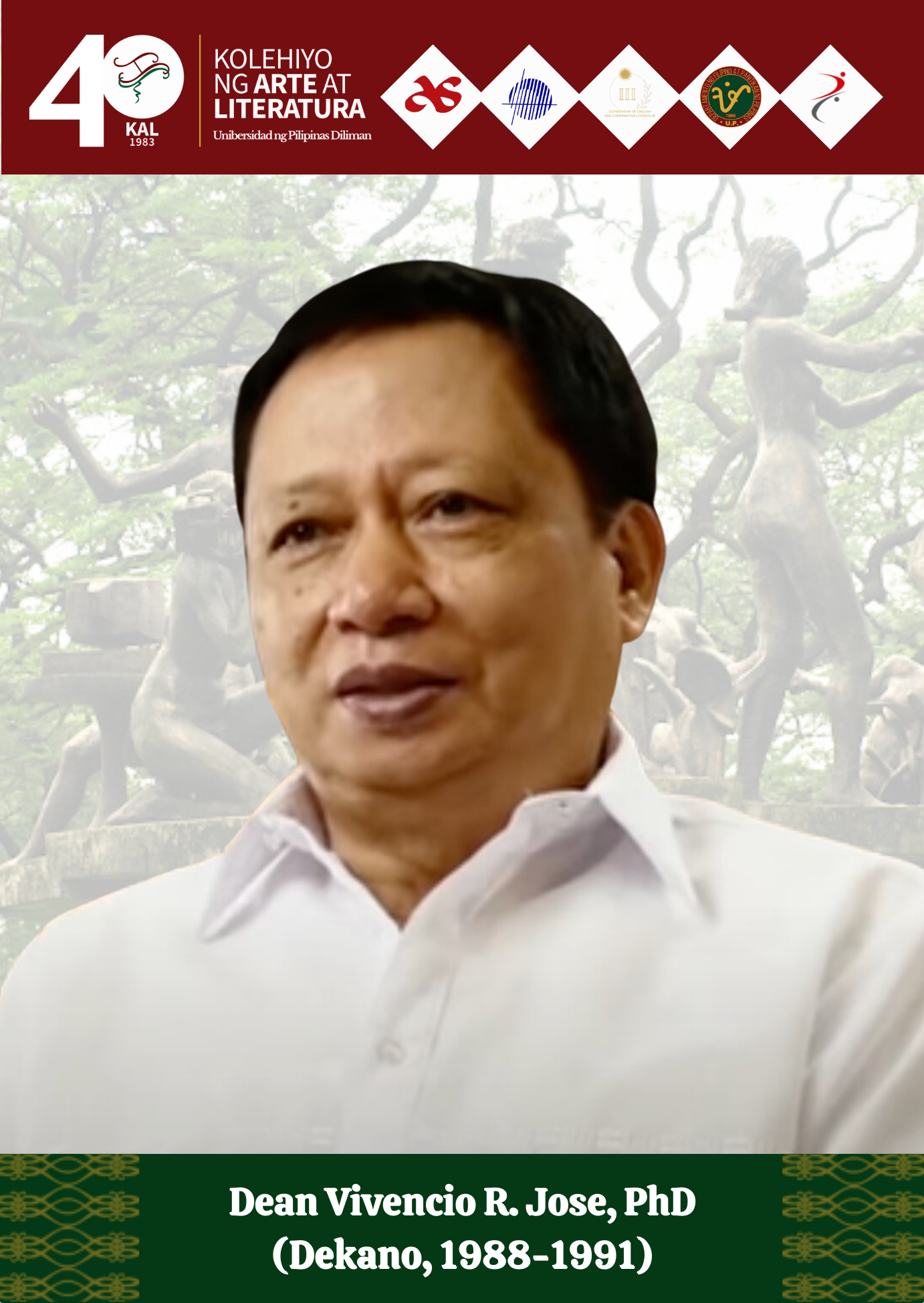
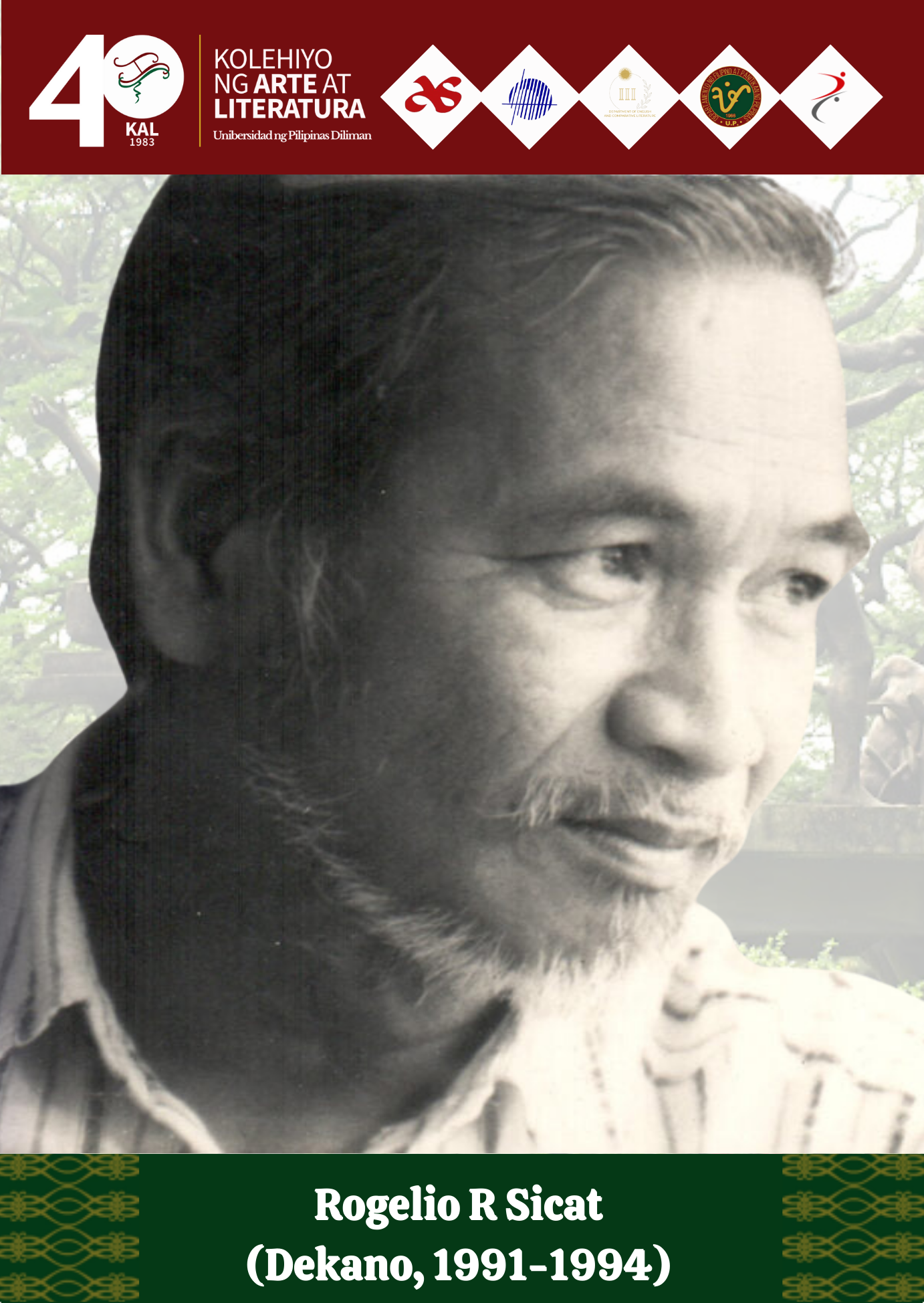
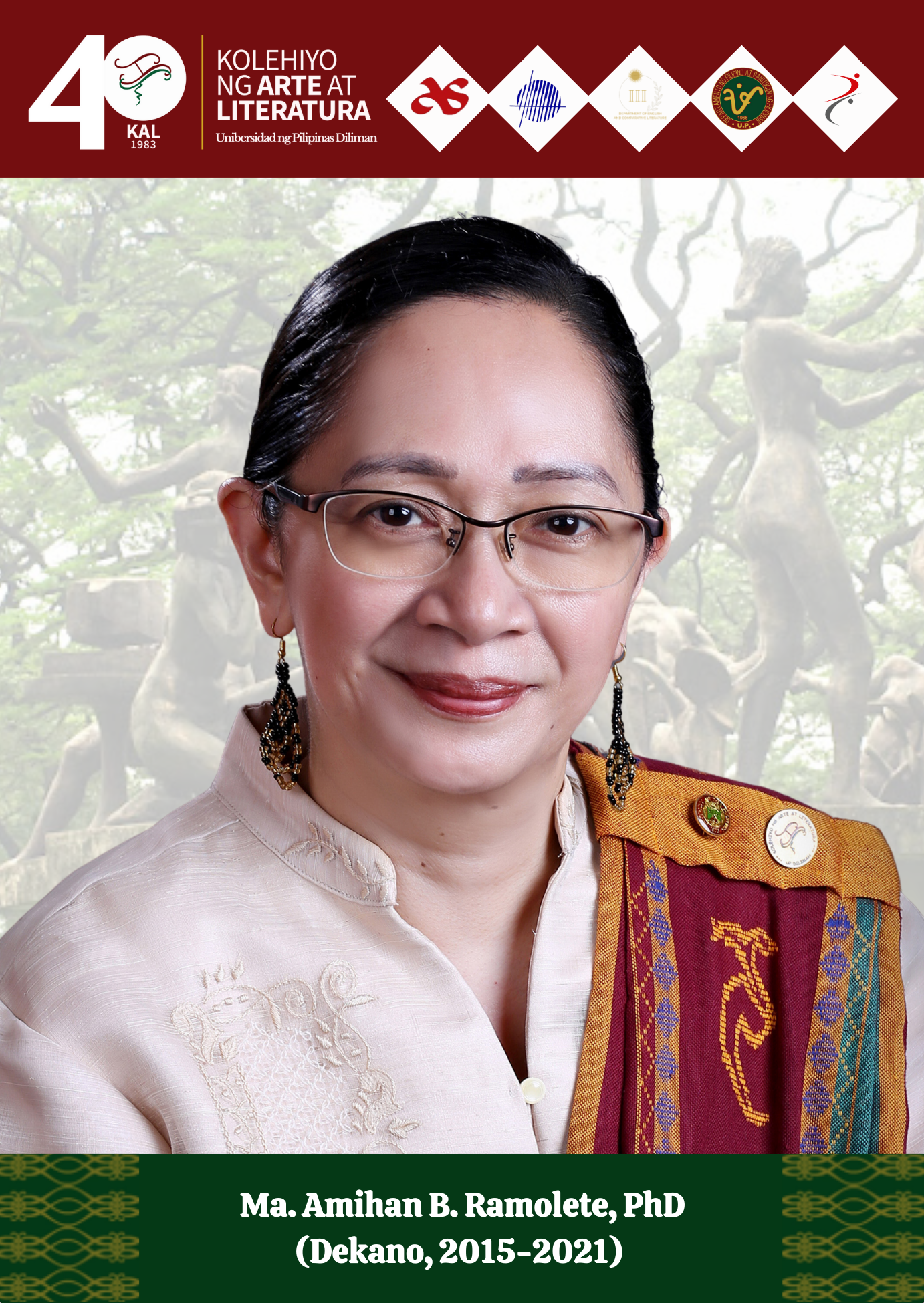
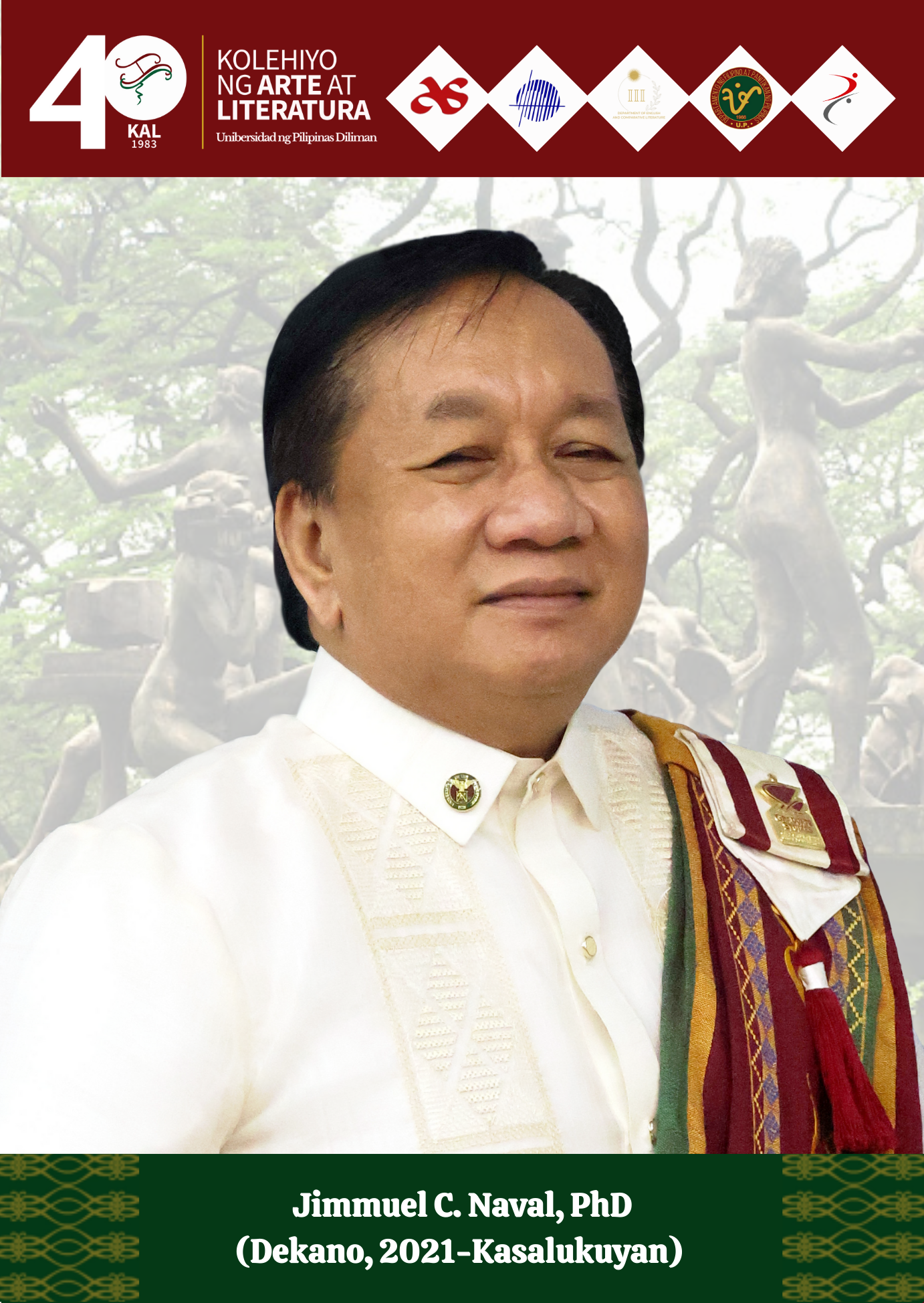
The College of Arts and Letters was established in 1983 following the division of the original College of Arts and Sciences (CAS) into three parts.
The reorganization separated the arts from the sciences. The roots of the UP College of Arts and Letters trace back to its original name, the College of Philosophy, Science, and Letters, founded in 1910. On June 30, 1911, the college was renamed the College of Liberal Arts and Sciences. The CAS offered programs in the humanities, social sciences, and natural sciences. On September 30, 1976, a reorganization plan created three divisions: the Division of Humanities, the Division of Science, and the Division of Social Sciences and Philosophy.
The Division of Humanities, led by the Associate Dean, included five departments that still exist today in CAL: the Department of Art Studies, the Department of English and Comparative Literature, the Department of European Languages, the Departmento ng Filipino at Panitikan ng Pilipinas, and the Department of Speech Communication and Theatre Arts.
Founded in 1910, the Department of English and Comparative Literature is CAL’s oldest department. Formerly called the Department of English, it was renamed in 1957 when courses in comparative literature were introduced. Its mission is to provide students with excellent English instruction to access widespread knowledge and to communicate Filipino culture and intellectual heritage globally.
Established on June 3, 1910, the Department of European Languages is CAL’s second oldest. Initially, the Department of French and German merged into the Department of Modern Languages, while the Departments of Spanish and Latin joined to form the Department of Spanish. This development justified a unified department based on the historical significance and relevance of these four languages. Its focus is to develop students’ communication skills in foreign languages alongside a deep understanding of foreign cultures.
In 1959, two additional departments emerged from the Department of English: the Department of Speech Communication and Drama, now known as the Department of Speech Communication and Theatre Arts, and the Department of Humanities. The Department of Speech Communication and Theatre Arts was created in May 1959 to develop and sustain the discipline of speech communication and theatre arts within the university. Its faculty is dedicated to delivering responsive instruction, incorporating Filipino culture into their programs, and blending tradition with modern technology.
The Department of Art Studies, formerly called the Department of Humanities, was part of a special extension project by the Department of English in 1959. It covers various expressions of culture and the arts, including painting, sculpture, film, and music. By adopting both traditional and non-traditional approaches to art theory and criticism, it promotes insightful exploration into the study of art.
In 1966, the Departmento ng Filipino at Panitikan ng Pilipinas was the youngest among CAL’s departments. Its main focus is to develop the Filipino language and other Philippine languages and to conduct research on different ethnolinguistic groups and their literary traditions. Its ultimate aim is to pave the way for a truly relevant, pro-Filipino, and nationalist education.
Today, CAL continues to lead the arts and letters in the country. Through its core functions—instruction, research, and extension—CAL upholds humanistic ideals amid technological progress, promotes arts and letters as tools for liberation and empowerment, and instills values that form the foundation of a nationalistic culture.