

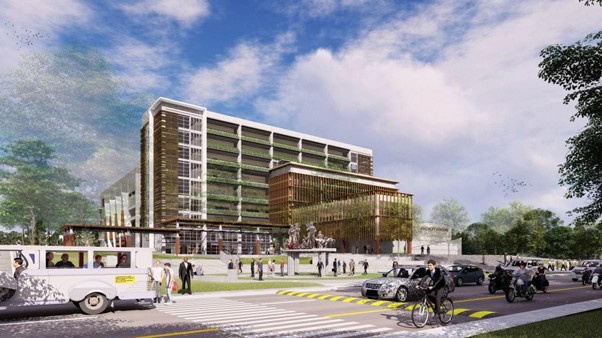
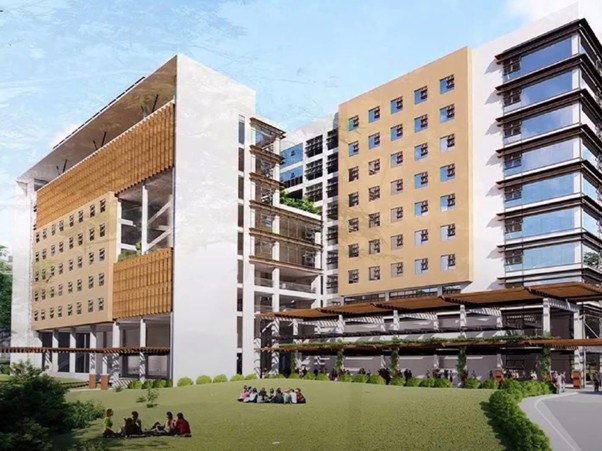
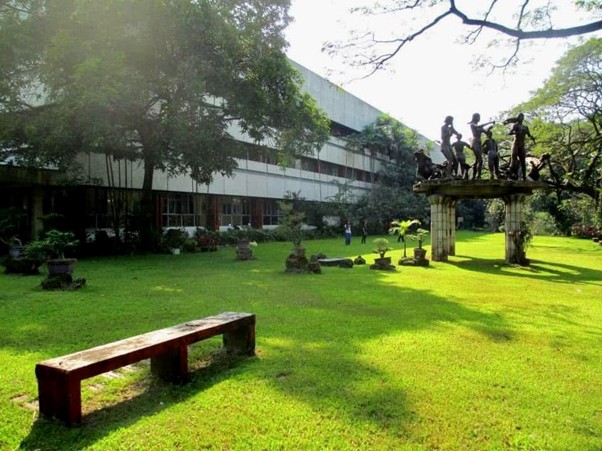
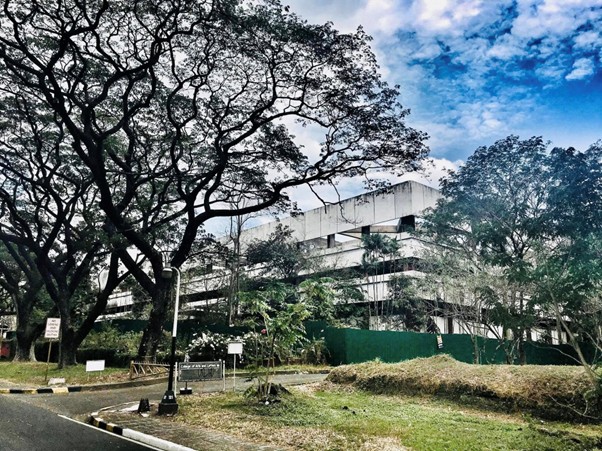
On April 1, 2016, a decade ago, a devastating fire engulfed the Faculty Center (FC), the permanent home of the UP College of Arts and Letters (CAL), causing irreparable damage and destruction. This catastrophic event resulted in the future of invaluable files, cherished memorabilia, and a wide array of academic materials. Among the losses were the works of National Artists, National Scientists, Professors Emeriti, and highly acclaimed teachers, researchers, and artists. The fire gutted priceless physical assets and disrupted these materials’ academic and cultural continuity.
As CAL continues to operate under purportedly temporary conditions, the ongoing delays in constructing the new FC and CAL buildings have imposed significant challenges. Faculty members, students, and staff have endured these inconveniences for an extended period. Despite adversity, the College has made notable advancements in the QS World University Rankings for Arts and Humanities. This achievement is particularly commendable given the innumerable obstacles encountered, such as the absence of a permanent home that would house dedicated faculty and administration offices, classrooms, seminar rooms, and student spaces, all severely compromised after the fire that devastated the Faculty Center in 2016.
In the most recent edition of these rankings, in the Arts and Humanities, UP Diliman, through CAL, has ascended to the 331st position globally for the year 2025, a significant improvement from its previous ranking of 351st, higher than any Philippine university. This upward trajectory in rankings can be attributed to the exceptional performance of three specific subject areas within CAL, which have notably bolstered UP’s standing in the Arts and Humanities:
- English Language & Literature (under the UPD Department of English and Comparative Literature): ranked 151-200.
- Modern Languages (offered by the UPD Department of European Languages): ranked between 201 and 250.
- Performing Arts (mainly under the UP Department of Speech Communication and Theatre Arts) ranked between 101 and 150.
Despite lacking a dedicated building for administrative offices, incubation spaces, and various academic activities, CAL’s educational programs have consistently ranked higher than most units across the University of the Philippines System. This
On April 1, 2016, a decade ago, a devastating fire engulfed the Faculty Center (FC), the permanent home of the UP College of Arts and Letters (CAL), causing irreparable damage and destruction. This catastrophic event resulted in the future of invaluable files, cherished memorabilia, and a wide array of academic materials. Among the losses were the works of National Artists, National Scientists, Professors Emeriti, and highly acclaimed teachers, researchers, and artists. The fire gutted priceless physical assets and disrupted these materials’ academic and cultural continuity.
As CAL continues to operate under purportedly temporary conditions, the ongoing delays in constructing the new FC and CAL buildings have imposed significant challenges. Faculty members, students, and staff have endured these inconveniences for an extended period. Despite adversity, the College has made notable advancements in the QS World University Rankings for Arts and Humanities. This achievement is particularly commendable given the innumerable obstacles encountered, such as the absence of a permanent home that would house dedicated faculty and administration offices, classrooms, seminar rooms, and student spaces, all severely compromised after the fire that devastated the Faculty Center in 2016.
In the most recent edition of these rankings, in the Arts and Humanities, UP Diliman, through CAL, has ascended to the 331st position globally for the year 2025, a significant improvement from its previous ranking of 351st, higher than any Philippine university. This upward trajectory in rankings can be attributed to the exceptional performance of three specific subject areas within CAL, which have notably bolstered UP’s standing in the Arts and Humanities:
- English Language & Literature (under the UPD Department of English and Comparative Literature): ranked 151-200.
- Modern Languages (offered by the UPD Department of European Languages): ranked between 201 and 250.
- Performing Arts (mainly under the UP Department of Speech Communication and Theatre Arts) ranked between 101 and 150.
Despite lacking a dedicated building for administrative offices, incubation spaces, and various academic activities, CAL’s educational programs have consistently ranked higher than most units across the University of the Philippines System. This achievement is a testament to the resilience and dedication of the faculty, staff, and students.
After the Faculty Center fire, CAL faculty members, alumni, and former students were proclaimed National Artists. Three of the National Artists recognized in 2022 were affiliated with CAL: Gemino Abad (Literature), Tony Mabesa (Theater), and Ricky Lee (Film and Broadcast Arts). Of the National Artists proclaimed in 2018, two are from CAL: Amelia Lapeña-Bonifacio (Theatre and Literature) and Resil B. Mojares (Literature).
Previously named National Artists are former Dean Virgilio Almario (Literature), Francisco Arcellana (Literature), Ishmael Bernal (Film), Salvador Bernal (Theatre Design), Lino Brocka (Theatre, Film and Broadcast Arts), NVM Gonzalez (Literature), Wilfrido Maria Guerrero (Theatre), Amado V. Hernandez (Literature), Bienvenido Lumbera (Literature), Carlos P. Romulo (Literature), Rolando Tinio (Literature and Theatre), and Jose Garcia Villa (Literature).
Aside from these National Artists, CAL has produced numerous Palanca, CCP, TOYM, DOST-NRCP, Metrobank Outstanding Teacher, Premio Zobel, and National Book Awardees, many recipients of grants and fellowships from the Asian Cultural Council, Australia Awards, British Council, Chevening, Erasmus Mundus, Fulbright, Japan Foundation, Korea Foundation, Monbugakusho, and other agencies.
Like the mythical Phoenix, the College remains optimistic that its permanent home will rise again, symbolizing renewal and restoring an even more dynamic academic environment.